December 15, 2011 at 9:52 am
· Filed under Agricultural Biotechnology, Consumer Attitudes About Biotechnology
Terry D. Etherton

One objective of my blog is to provide a public forum for presenting science-based facts about numerous issues that relate broadly to the use of biotechnologies and technologies for food production. In the spirit of my blog being a public forum, students in a first-year seminar course I taught this Fall (Animal Science 110S: Animal Biotechnology and Society) had to write a short blog about some aspect of biotechnology and agriculture.
My objective was for the students to learn about biotechnology AND engage in a learning activity about communicating science to society. I shared with the students that writing a blog would be a terrific learning experience about communicating science. You will be the “judge” of how well they did this. Read the rest of this entry »
Permalink
November 28, 2011 at 11:24 am
· Filed under Agricultural Biotechnology, Consumer Attitudes About Biotechnology, Science & Education, The Food System

LUDWIGSHAFEN, GERMANY, November 8, 2011 – Consumers’ interest in agriculture and personal respect for farmers is high, even in countries where less than two percent of the population works in agriculture, according to the BASF Farm Perspectives Study, which surveyed 1,800 farmers and 6,000 consumers. Yet farmers and consumers also agree that farmers’ reputations remain low. The study, which outlines the way farmers and consumers view the farming profession, its challenges and its support network, revealed surprisingly strong agreement on major issues, including the role of farmers and the major challenges farmers are facing in the 21st century. Read the rest of this entry »
Permalink
November 7, 2011 at 10:00 am
· Filed under Agricultural Biotechnology, Consumer Attitudes About Biotechnology, Science & Education, The Food System
Terry D. Etherton
This article was first published on the IFIC Food Insight Blog on November 4, 2011.
Sustainable is a popular word these days in conversations about the practices used to produce our food. The word is used and misused extensively.
I have asked many folks what sustainable food production means. The answers are diverse, and astonishing in some instances. Relative the latter, some convey that sustainable food production is the only “way” and that unsustainable agriculture doesn’t work. The latter response is more than puzzling to me. If the business is not economically sustainable then it is unsustainable. Read the rest of this entry »
Permalink
November 3, 2011 at 3:50 pm
· Filed under Ag Biosecurity, Agricultural Biotechnology, Consumer Attitudes About Biotechnology, Science & Education, The Food System
Terry D. Etherton
The public discussion about the need for adequate food is a luxury that well-fed people in developed countries can afford. But in developing countries where the population is growing while the supply of farmland shrinks, people are grappling with a much thornier and higher-stakes dilemma. Unless they can grow more food on less land, they may not have enough to eat. The scale of this is already daunting – more than 1 billion individuals in the world go to bed each night hungry. Read the rest of this entry »
Permalink
October 11, 2011 at 11:43 am
· Filed under Ag Biosecurity, Consumer Attitudes About Biotechnology, Science & Education, The Food System
By Charlie Dunmore
BRUSSELS | Tue Oct 11, 2011
(Reuters) – Europe’s biotechnology industry has warned the European Commission that agricultural imports vital to EU food security are increasingly being put at risk, due to the slow pace of the bloc’s approval system for genetically modified (GM) crops.
In a report to be presented to EU policymakers on Tuesday, biotech association EuropaBio said the speed of GM crop authorizations in Europe is slowing — even as governments worldwide seek to step up the pace of their approvals.
“The EU authorization process for GM products takes substantially longer than comparable systems, despite the fact that government processes around the world to assess the safety and impact of GM products are essentially the same,” it said. Read the rest of this entry »
Permalink
September 12, 2011 at 9:59 pm
· Filed under Science & Education, The Food System
Terry D. Etherton

Ag Progress Days (APD) was held a few weeks ago at Penn State. Ag Progress Days is a 3-day event that is hosted by the College of Agricultural Sciences at Penn State University. Typically, APD attracts about 50,000 attendees (for additional insights into what APD is, please see: How I Spent a Summer Day at Penn State’s Ag Progress Days).
This year, the College hosted a program that involved short presentations by various Penn State employees about a variety of scientific topics and agriculture. I was invited to speak about Biotechnology in the Barnyard…a topic near and dear to my heart. An important aspect of my talk addressed the issue of how are we going to feed a growing world population? I believe that the development and application of science will play a role in trying to feed the world in the future. While I have given versions of this talk countless times over the past 30 years, this presentation, actually the question and answer session, turned out to be very different. Read the rest of this entry »
Permalink
August 18, 2011 at 4:48 pm
· Filed under Consumer Attitudes About Biotechnology, Science & Education, The Food System
Terry D. Etherton

I have spent about 30 years traveling down the “road” of trying to communicate science to the public. It has been an interesting journey. I launched my blog, Terry Etherton Blog on Biotechnology, in 2006 for many reasons, including the idea of providing science-based facts for consumers about many public discussions around food biotechnology in which activists and activist groups try to scare consumers.
During this journey, I have come to appreciate the tremendous need for scientists to become more proactive in communicating science. Specifically, the scientific community needs to be much better at conveying what they do and how science and technology benefit consumers. I have written about this, most recently in Please Explain: Training Scientists to be Better Communicators imploring scientists to get involved.
In my travels down this “road”, I have become sensitized to the issue of how is the information I present being “heard” by the audience. This can be a real adventure, especially when some in the “audience” share “they don’t believe the message(s)” or messenger (i.e., me). This raises the interesting question of what to do? Read the rest of this entry »
Permalink
August 2, 2011 at 2:08 pm
· Filed under The Food System and Bioterrorism
Terry D. Etherton

Disease outbreaks that originate from consumption of food attract great media attention, and create concerns for many in society…for good reason. The recent outbreak of Escherichia coli (E. coli) in Europe is a good example of this and the societal problems that ensue. As of July 26, 2011, the European Centre for Disease Prevention and Control had reported 3900 confirmed or probable E. coli cases including 46 deaths from the recent E.coli outbreak in Europe. The media attention that a disease outbreak like this causes is staggering!
Read the rest of this entry »
Permalink
July 20, 2011 at 11:26 am
· Filed under The Food System, The Food System and Bioterrorism
Terry D. Etherton
Did you ever wonder where your milk comes from? And, no, I am not referring to cows. My question pertains to the geographic regions of the United States that contribute most to milk production.
As you will see, the results are revealing. Read the rest of this entry »
Permalink
June 27, 2011 at 5:01 pm
· Filed under Consumer Attitudes About Biotechnology, Science & Education, The Food System
Terry D. Etherton

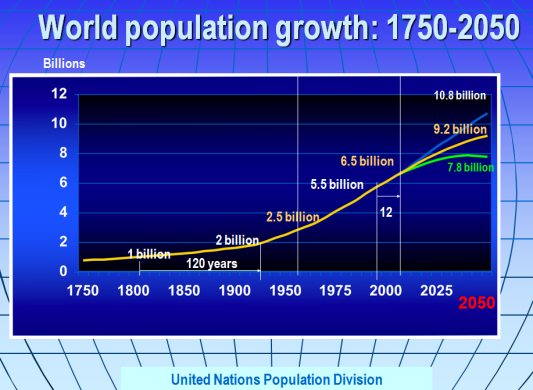
Much has been written by others and myself about the need to feed a growing World population that will increase to between 9 and 10 billion individuals by 2050 (based on estimates from the Population Estimates and Projections Section of the UN). Making projections about the impact of population growth on food production raises the question of just how much food will be required to feed 10 billion people? While the question is straightforward, developing these estimates is remarkably challenging. The vast majority of numbers are derived from food disappearance data, that is food for human consumption that is produced is assumed to “disappear” via consumption. This is problematic, in part, because it has been estimated that 30 to 40% of food in developed and developing countries is wasted (Godfray et al., 2010). This wastage spans the spectrum of the food system from production to plate waste.
The question emerges, then, of whether there is more accurate approach for estimating projected food needs in 2050? Read the rest of this entry »
Permalink