August 19, 2008 at 9:15 am
· Filed under Agricultural Biotechnology, Consumer Attitudes About Biotechnology, Science & Education, The Food System
Terry D. Etherton
The New York Times published an interesting article “A Conversation with Nina Fedoroff - An Advocate for Science Diplomacy” on August 19, 2008. Dr. Fedoroff, formerly at Penn State, is Science Adviser to the Secretary of State and Administrator of the Agency for International Development.
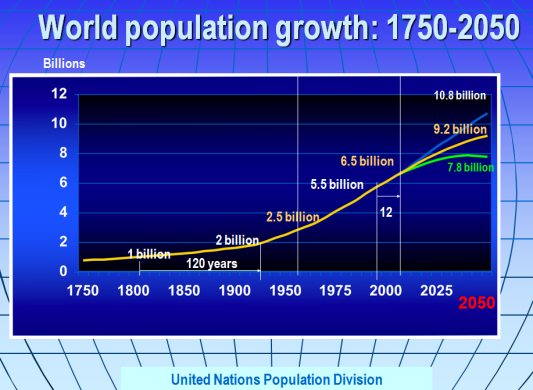
Dr. Fedoroff discusses the reality that science and technology are the drivers of the most successful economies in the 21st century. She also addresses the importance of technological innovation for feeding a growing world, and that organic farming can’t support the earth’s current population.
The article is an interesting read that clearly presents why we need to continue investing in science to develop new technologies to feed a growing world.
Enjoy the article!
Permalink
July 31, 2008 at 4:08 pm
· Filed under Agricultural Biotechnology, Consumer Attitudes About Biotechnology, Science & Education, The Food System
Terry D. Etherton
Genetically engineered (GE) animals provide innovative technologies that can transform public health through biomedical, food and environmental applications, according to a scientific report released by the Biotechnology Industry Organization (BIO).
The report, Genetically Engineered Animals and Public Health – Compelling Benefits for Health Care, Nutrition, the Environment and Animal Welfare, discusses how GE animals will enhance human health, food production, environmental protection, animal health and cutting-edge industrial applications. The report was authored by Scott Gottlieb, MD, of the American Enterprise Institute, and Matthew B. Wheeler, PhD, of the Institute for Genomic Biology, University of Illinois at Urbana-Champaign. Dr. Gottlieb and Dr. Wheeler are experts in the field of genetic engineering of animals. Read the rest of this entry »
Permalink
July 28, 2008 at 5:34 pm
· Filed under Agricultural Biotechnology, Consumer Attitudes About Biotechnology, Organic, Science & Education
Steven King
Irish Examiner.com
Published July 23, 2008
IN Gulliver’s Travels, the King of Bobdingnag — the land of the giants — claimed that whoever could make two ears of corn grow where only one grew before was a greater patriot than all the politicians put together.
It’s sad to note then that nearly 300 years on from the publication of Swift’s satire, the politicians are still standing in the way of an agricultural technology that has the potential to do just that. Read the rest of this entry »
Permalink
July 28, 2008 at 10:17 am
· Filed under Agricultural Biotechnology, Cloning, Consumer Attitudes About Biotechnology
Terry D. Etherton
On July 15, 2008, The European Food Safety Authority (EFSA) announced its final scientific opinion that food from cloned cattle and pigs is safe, and there are no implications of animal cloning on the environment. Read the rest of this entry »
Permalink
July 27, 2008 at 7:50 pm
· Filed under Agricultural Biotechnology, Organic
New York, NY — July 21, 2008. The latest attempt by proponents of organic agriculture to prove that organically grown crops are nutritionally superior to conventional ones has failed, according to Joseph D. Rosen, Ph.D., emeritus professor of Food Toxicology at Rutgers University and a scientific advisor to the American Council on Science and Health (ACSH). Read the rest of this entry »
Permalink
July 21, 2008 at 5:17 pm
· Filed under Agricultural Biotechnology, Consumer Attitudes About Biotechnology, Organic, Science & Education, rbST Facts and Information, rbST Public Discussion
No Differences Found in the Composition of Conventional, rbST-Free and Organic Milk
Terry D. Etherton
A new scientific study by Vicini et al. published in the July issue of the prestigious Journal of the American Dietetic Association (JADA) reports the results of the first in-depth survey study comparing retail milk for quality, nutritional value and levels of different milk hormones, including bovine somatotropin (bST). The study that we published found that there were “no meaningful differences” in the composition of milk with the three different label claims. Read the rest of this entry »
Permalink
July 16, 2008 at 8:57 am
· Filed under Agricultural Biotechnology, Consumer Attitudes About Biotechnology
USAgNet
With world wheat stocks at historic lows, some longtime opponents of transgenic (often called genetically modified organisms) are coming to the realization that, without increased adaptation of transgenics, the world’s farmers cannot produce enough safe, wholesome food to feed its people. Read the rest of this entry »
Permalink
July 15, 2008 at 11:51 am
· Filed under Agricultural Biotechnology, Cloning, Consumer Attitudes About Biotechnology, Science & Education
Terry D. Etherton
In previous blogs, I have written about the fact that the more consumers know about biotechnology, the more they accept it. Thus, educational programs/strategies are important to accurately inform the public. This is widely recognized…but comes with the reality that large scale programs to educate the public about science and ag biotechnology are challenging and costly.
Animal scientists at the University of California-Davis have just released a wonderful and educational movie on Animal Biotechnology. The documentary is narrated and co-authored by Cooperative Extension Specialist Alison Van Eenennaam and graduate student William Pohlmeier. My encouragement is to clink on the above link, and watch the movie! Read the rest of this entry »
Permalink
July 14, 2008 at 3:58 pm
· Filed under Agricultural Biotechnology, Consumer Attitudes About Biotechnology, rbST Public Discussion
Terry D. Etherton
For those who thought the public discussion about recombinant bovine somatotropin (rbST) might have faded…guess what? It has not!
A superb paper (“The Environmental Impact of Recombinant Bovine Somatotropin (rbST) use in Dairy Production”) published by Capper et al. on June 30 in the Proceedings of the National Academy of Sciences reports that use of rbST reduces the carbon footprint of milk production. This is an important contribution to the scientific base documenting the benefits of rbST use in the dairy industry. Read the rest of this entry »
Permalink
June 26, 2008 at 10:16 am
· Filed under Agricultural Biotechnology, Consumer Attitudes About Biotechnology, The Food System and Bioterrorism, rbST Public Discussion
“Sweet Bonus” or Survival? Get the Facts and Then Decide!
by Sherry Bunting
Introduction by Terry Etherton
On June 22, 2008, the Star Tribune newspaper (Minneapolis-St. Paul, Minnesota) published an article, “Is Labeling Milk as Free of Hormones a Bad Idea“, written by Lou Gelfand. The story is great example of the lousy and slanted journalism being practiced that focuses on agricultural biotechnology … in this case, rbST and milk labeling. Read the rest of this entry »
Permalink