DAS: Blogs:
Terry Etherton Blog on Biotechnology


Opinion: The Luxury to Criticize!

Harold Harpster, Professor of Animal Science
Department of Dairy & Animal Science
Penn
State University

I stop at the end of the lane to retrieve the day’s mail and folded around the usual stack of bills is my latest issue of TIME magazine. Before driving into the farm I take a quick look at the cover. What’s this? A package of bright red hamburger is center stage with a label across the package: “WARNING: This hamburger may be hazardous to your health. Why the American food system is bad for our bodies, our economy, and our environment- and what some visionaries are trying to do about it.” Immediately below the package in huge bold print are the words “ The Real Cost of Cheap Food”, by Bryan Walsh, Time’s  “Energy and Climate” writer. My immediate thought is “Here we go – some pseudo- expert who knows next to nothing about agriculture, has decided to trash our way of life once again”. I read the article right then and there and my first impression is certainly correct! Read the rest of this entry »

Comments

The Food System and Feeding the World

Terry D. Etherton

Earth Paint

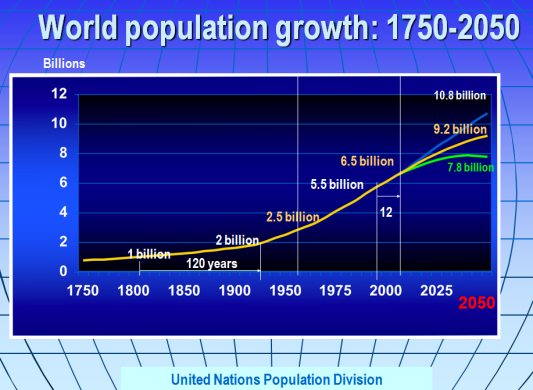
Much has been written about the “Food System” and how we should go about feeding the world.  To put “much” into context, I ran a Google search using the phrases “food systems” or food system; got 906,000 returns for the former and 759,000 returns for the latter phrase.

Why the keen interest in the food system?  One reason is that many scientists (including me) believe we need to apply science to make new discoveries in the food system that will help meet the food needs of the growing World population.  Dr. Norman Borlaug, Nobel Laureate, who passed away on September 12, 2009, and who is credited for launching the “Green Revolution” to feed the World was clear about this.  He passionately believed that science should be the most important tool to solve world hunger. Read the rest of this entry »

Comments (1)

Disease Outbreak and Consumption of Raw Milk in Wisconsin

A ProMed-mail post (September 16, 2009)

Glass of milk 2009

DNA test results and other evidence have now established that an outbreak of illness involving at least 35 people, the majority children and teens, was linked to drinking unpasteurized milk. Wisconsin food safety officials are cautioning consumers not to drink raw milk and farmers not to sell it to the public.

“Laws requiring pasteurization of milk have been on the books for more than half a century, and there are good public health reasons for that,” said Steve Ingham, head of the Food Safety Division in the Department of Agriculture, Trade and Consumer Protection [DATCP]. Read the rest of this entry »

Comments

The Community Value of a Dairy Farm

N. Alan Bair
Director of Dairy Industry Relations
Penn State University

PA Cows Paint

I recently had the opportunity to make a short presentation to a mixed audience of local farmers and their neighbors in Perry County on the value of a dairy farm to a community. The organizers requested this topic primarily for the non-farm neighbors thinking it would give them a better appreciation of what a farm brings to the community and potentially “soften” some existing and future farm-urban conflicts. Based on the comments after my brief talk it became apparent that the farmers in the audience appreciated the information as much as their neighbors, reminding us once again that agriculture has a wonderful story to tell – but we must remember to tell it! With all the current bad news in the dairy industry, everyone appreciates hearing some positive things about the important work of producing dairy foods.

What a dairy farm brings to a community can be summarized into three main categories: Prosperity, People and the Planet.

Read the rest of this entry »

Comments

How I Spent a Summer Day At Penn State’s Ag Progress Days

Terry D. Etherton

Ag Progress Days Image 1 2009

I had a wonderful (and sweltering) time at Ag Progress Days (APD) last week.  This is an event sponsored by the College of Agricultural Sciences and attracted about 50,000 attendees over three days.

I have been asked:  what do you do out there for three days?  A lot (more about this later)!  And, the faculty and staff in the Department of Dairy and Animal Science do a great deal to put on a variety of educational and science-based programs for APD attendees. Read the rest of this entry »

Comments

The Slippery Slope Involved in the Proposed Move of the U.S. Foot and Mouth Disease Lab – What a “Mess”!

Background: Common to all fields of science and engaged scientists is their willingness to participate in the free exchange of ideas. This blog often posts such ideas in the form of existing citable scientific contributions and news items. In recent conversations among like-minded individuals regarding contemporary topics in livestock production agriculture and biotechnology, the issue of U.S. animal disease research was raised. No factor in livestock production can impact production efficiency and profitability more than a disease issue. And, in the case of a highly contagious foreign animal disease (FAD) where the U.S. would change from disease-free status to one of a FAD positive diagnosis, livestock production could be decimated in quick order. Read the rest of this entry »

Comments

Assessing the Severity of an Influenza Pandemic

From the World Health Organization

Assessing the Severity of an Influenza Pandemic

The major determinant of the severity of an influenza pandemic, as measured by the number of cases of severe illness and deaths it causes, is the inherent virulence of the virus. However, many other factors influence the overall severity of a pandemic’s impact. Read the rest of this entry »

Comments

INFLUENZA A (H1N1) in Pigs in Canada – FAO Update

Terry D. Etherton

A recent Food and Agriculture Organization (FAO) Media Release about the detection of A/H1N1 virus in pigs in Canada is presented below.  The release also was distributed by ProMED. Read the rest of this entry »

Comments

Pork Production Practices Help Contain H1N1 Influenza

Bob Mikesell, Ph.D.
Senior Instructor
Department of Dairy and Animal Science

Introduction

In light of the H1N1 (formerly known as swine flu) virus outbreak, consumers should have an understanding of the influenza virus from a pork producer perspective, and the steps that US swine producers routinely utilize to keep pigs healthy. Read the rest of this entry »

Comments

‘Low-Carbon Diets’ will have Little Effect on Environment

William Henning
Emeritus Professor of Animal and Food Science
Penn State University

Dr. Henning had a letter posted in USA Today combating myths about beef and global warming.

Here is Dr. Henning’s letter. Read the rest of this entry »

Comments

« Previous entries Next Page » Next Page »